Csaba Szferle, Márton Sághi, Beáta Nagy, Péter Horváth, András Kriston, Ferenc Kovács, Tibor Krenács, Attila Fintha
Szferle et al. have developed an AI-based pathology workflow to objectively quantify and predict heart transplant rejection from biopsy images . This study, published in the Hungarian medical journal Orvosi Hetilap, centered on optimizing and applying our Biological Image Analysis Software (BIAS) to automatically identify cells and measure key morphological parameters that indicate rejection . The research, involving team members from our company, Single-Cell Technologies, successfully demonstrated that BIAS can quantify parameters like lymphocyte density and proximity to heart muscle cells, which strongly correlate with the severity of graft rejection, offering a new and powerful quantitative tool for pathologists .
A Quantitative Approach to Diagnosing Heart Transplant Rejection
The gold standard for monitoring organ rejection in heart transplant patients is the histopathological analysis of endomyocardial biopsies . A pathologist visually inspects the tissue for signs of rejection, such as the infiltration of immune cells (lymphocytes) that attack the new heart muscle. While effective, this process can be subjective and time-consuming . Digital pathology and artificial intelligence offer an opportunity to make this analysis more objective, reproducible, and quantitative .
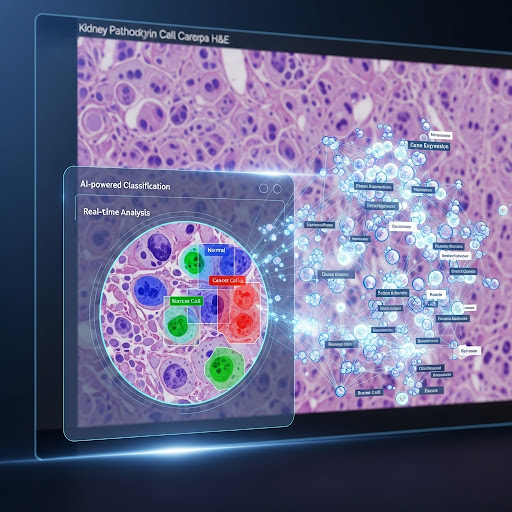
This study aimed to create a robust, AI-powered method for this exact purpose. The primary goal was to optimize and validate our BIAS software to recognize and separate individual cell nuclei and tissue structures in digitized biopsy slides . The BIAS-driven workflow was designed to transform a visual assessment into a set of precise measurements.
Researchers used hematoxylin-eosin-stained biopsy samples from patients experiencing different grades of acute cellular rejection: Grade 0 (no rejection), Grade 1 (mild), and Grade 2 (moderate) . After digitizing the slides, they trained BIAS using manually annotated images to reliably identify different cell types—specifically lymphocytes and heart muscle cells (myocytes)—as well as connective tissue and edema .
The results of the automated analysis were definitive:
- Lymphocyte Density: BIAS confirmed that as the grade of rejection increased, the density of lymphocytes in the heart tissue rose significantly. The average density went from 127/mm² in non-rejection cases to 324/mm² in mild rejection and 687/mm² in moderate rejection .
- Cell Proximity: The software measured the distances between cells, a parameter not used in traditional grading but highly relevant to the rejection process. It found that as rejection worsened, the average distance between individual lymphocytes decreased, indicating they were forming denser clusters .
- Myocyte-Lymphocyte Distance: Most importantly, BIAS quantified the distance between the attacking lymphocytes and the target myocytes. In non-rejection cases, lymphocytes were significantly farther from the heart muscle cells than in cases with mild or moderate rejection .
This study successfully demonstrates that our BIAS software can provide an objective, quantitative analysis of heart transplant biopsies . By measuring parameters like cell density and intercellular distances, the software offers pathologists powerful new data to support their diagnoses. This complex digital image analysis is a promising tool for improving the evaluation and prediction of organ rejection, ultimately aiding in clinical decisions and improving patient care.